
Search New Jersey Divorce Records
New Jersey divorce records are public documents maintained by the Superior Court in each of the 21 counties and by the New Jersey Department of Health. County courts store full divorce case files at the Family Division of the Superior Court. The state health department holds divorce certificates dating back to 1848. You can search these records online, by mail, or in person at courthouses throughout New Jersey.
New Jersey Divorce Records Quick Facts
Where to Find New Jersey Divorce Records
There are two main sources for divorce records in New Jersey. The Superior Court, Family Division in each county holds the complete case files for every divorce filed there. These files include the complaint for divorce, the answer from the other spouse, any settlement agreements, and the final judgment of divorce signed by the judge. The clerk of the Superior Court in each county maintains these records and can provide copies. You can visit the courthouse in person or search some records through the New Jersey Courts online system.
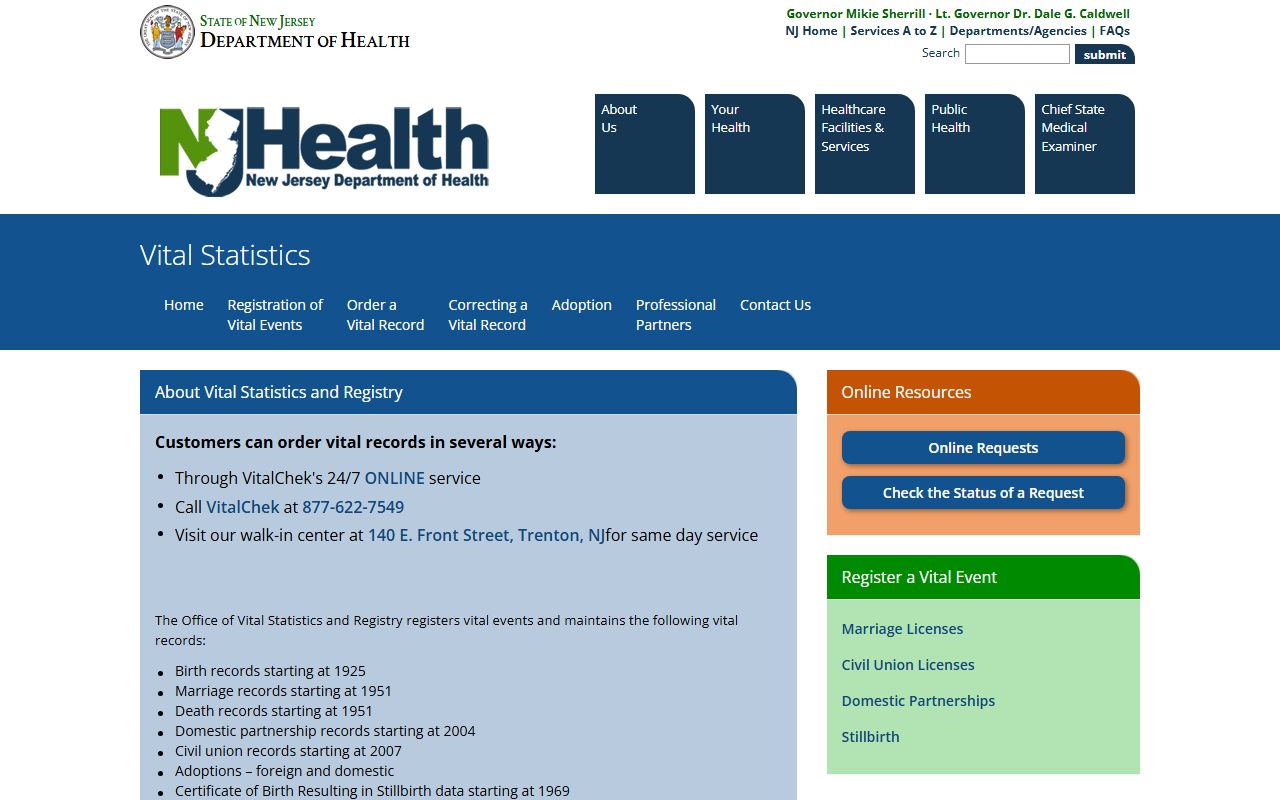
The New Jersey Department of Health, Office of Vital Statistics and Registry keeps divorce certificates. A certificate is not the same as a judgment of divorce. It shows only basic facts: the names of both spouses, the date of divorce, and the county where it was granted. The health department has certificates for divorces from 1848 to the present. You can order these by mail or in person at the Office of Vital Statistics in Trenton. Certificates cost $25 for the first copy and $2 for each additional copy ordered at the same time in New Jersey.
Note: Divorce certificates contain less detail than full court records from the Superior Court clerk in New Jersey.
How to Search Divorce Records in New Jersey
New Jersey offers several ways to look up divorce records. Online access is the fastest method for most searches. You can search from home at any time. In-person visits work well when you need certified copies or want to review the full case file. Both options are available to anyone in New Jersey.
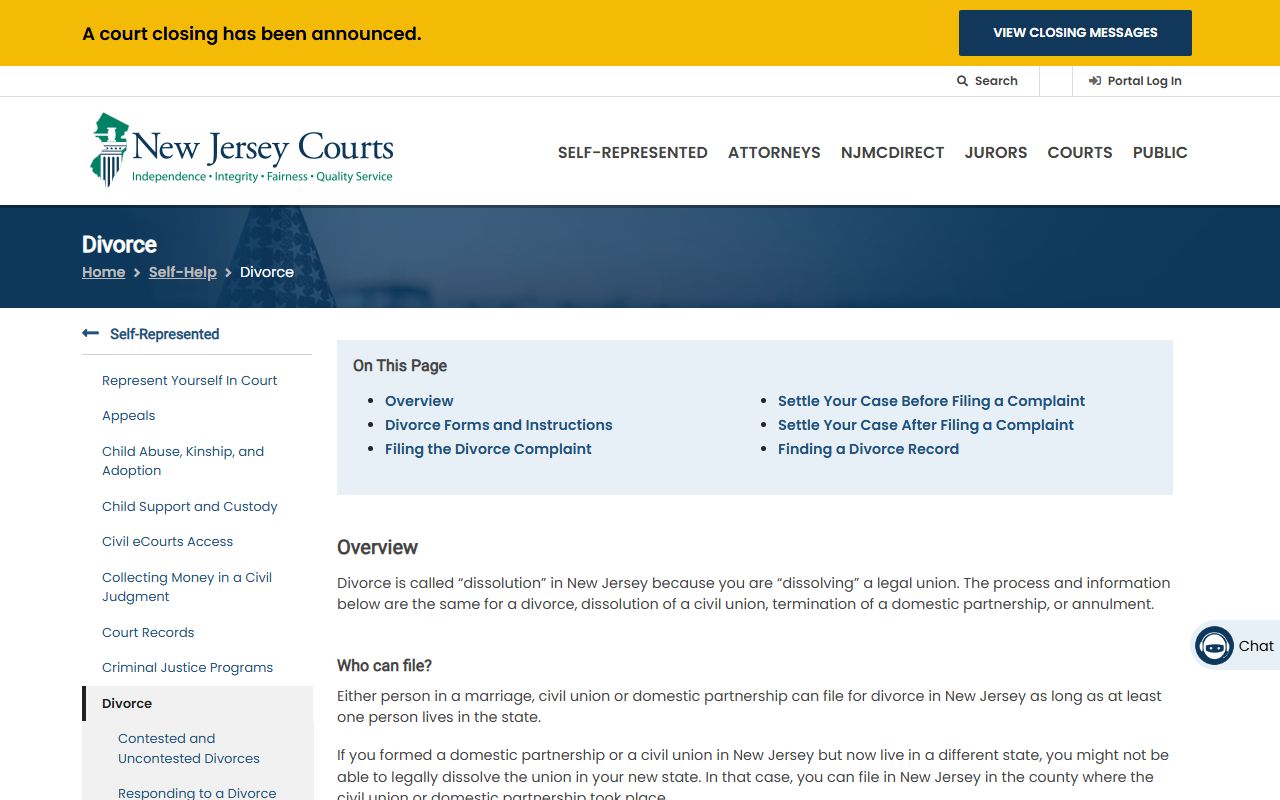
The New Jersey Courts eCourts system provides access to civil court records across all 21 counties in New Jersey. You can search by party name or docket number to find divorce cases. The system is free to use for basic case information including party names, filing dates, and case status. For copies of actual documents, you need to contact the county clerk or visit the courthouse. Go to njcourts.gov to begin your search in New Jersey.
To search divorce records through eCourts, you need the following:
- Full name of at least one spouse
- Approximate date of the divorce filing
- County where the case was filed
You can also search in person at any Superior Court clerk office in New Jersey. Go to the county where the divorce was filed. Staff can help you find records and make copies. Most clerks charge a fee per page for copies, and certified copies cost more than plain ones. For divorce certificates only, mail your request to the New Jersey Office of Vital Statistics and Registry, P.O. Box 370, Trenton, NJ 08625-0370. Extra fees apply for expedited service in New Jersey.
Types of Divorce Records in New Jersey
New Jersey divorce records include several types of documents. The judgment of divorce is the final court order that ends a marriage. A judge signs this after the case is resolved. The judgment states the marriage is dissolved and covers child custody, support, alimony, and property division. This is the most complete divorce record available in New Jersey. It comes from the Superior Court clerk in the county where the case was heard.
The divorce certificate is a shorter document from the New Jersey Department of Health. A certificate proves a divorce took place but does not contain the details of the settlement. Many people need a certificate for purposes like changing their name, remarrying, or updating other legal documents in New Jersey. You can get a certificate by mail from the Office of Vital Statistics in Trenton.
Divorce records in New Jersey typically contain the following:
- Full legal names of both spouses
- Date and place of the marriage
- Date the divorce complaint was filed
- Date the divorce was finalized
- County and court where it was heard
- Grounds cited for the divorce
- Terms of property division
Court case files may also contain motions, certifications, and other papers filed during the proceedings. These show the full history of the divorce case in New Jersey. You can get copies of any document in a case file from the Superior Court clerk.
New Jersey Divorce Laws and Rules
New Jersey law sets the rules for obtaining a divorce. These laws affect how long the process takes and what records are created. The state legislature has established specific rules for residency, grounds, property division, and support. You must follow these rules to file for divorce in New Jersey.
Under N.J.S.A. 2A:34-10, at least one spouse must have been a resident of New Jersey for at least 12 months before filing for divorce on no-fault grounds. This is the residency requirement. You file in the county where either spouse resides. The only exception is for adultery, which has no residency time requirement in New Jersey.
New Jersey allows both fault and no-fault divorces. N.J.S.A. 2A:34-2 lists the grounds for divorce. The no-fault ground is "irreconcilable differences" which have existed for at least six months and make it appear the marriage should be dissolved. Most divorces in New Jersey use this no-fault reason because it is simpler to establish. Fault-based grounds include adultery, desertion for 12 or more months, extreme cruelty, separation for 18 or more consecutive months, addiction, institutionalization, and imprisonment. Fault grounds may influence alimony and property division in New Jersey.
New Jersey does not have a mandatory waiting period after filing like some other states. Once the complaint is filed and the other spouse is served, the case can move forward. For uncontested cases where both sides agree, the divorce can be finalized relatively quickly. The court may issue temporary orders for child custody, support, or exclusive possession of the home while the case is pending in New Jersey.
New Jersey is an equitable distribution state. Under N.J.S.A. 2A:34-23.1, marital property is divided fairly but not always equally. The judge considers 16 factors when dividing assets in a divorce. These include the length of the marriage, each spouse's income and earning capacity, the standard of living during the marriage, and each person's contributions to the marital estate in New Jersey.
Divorce Record Fees in New Jersey
Fees vary based on what you need and where you get it in New Jersey. The New Jersey Department of Health charges $25 for a divorce certificate search plus one certified copy. Each additional copy ordered at the same time costs $2. Expedited processing is available for an extra fee. Mail requests should include a check or money order payable to the Treasurer, State of New Jersey.
Superior Courts charge their own fees for divorce cases and records in New Jersey. Filing a divorce complaint costs $300 in most counties. If you file without an attorney, there is an additional $25 filing surcharge. Getting copies of existing divorce records costs less. Most clerks charge per page for copies. Certified copies cost more than plain ones at any court in New Jersey.
Fee waivers are available for people who cannot afford the filing fees in New Jersey. You can apply by completing a Fee Waiver Application form. You must show proof of financial hardship such as receiving public assistance. The court will review your application and decide if you qualify for a fee waiver in New Jersey.
Note: Filing fees and copy fees can change, so contact the court or agency to confirm current costs in New Jersey.
How to Get Copies of New Jersey Divorce Records
You can get copies of divorce records in New Jersey in several ways. For divorce certificates from the Department of Health, you have two main choices. First, mail your request to the Office of Vital Statistics and Registry, P.O. Box 370, Trenton, NJ 08625-0370 with the names of both spouses, the date of divorce, the county, and your payment. Second, visit the Office of Vital Statistics in person at 140 East Front Street in Trenton where walk-in service is available during business hours in New Jersey.
For full divorce judgments and case files, go to the Superior Court clerk in the county where the divorce was filed in New Jersey. You can request copies in person or call ahead to check what you need. Some courts accept mail requests for copies. You will need to know the names of the parties or the docket number. The clerk can search the records and make copies for a fee in New Jersey.
Wait times vary by method and location in New Jersey. In-person requests at the Office of Vital Statistics are often processed the same day. Mail requests to the state take four to six weeks. Court record requests depend on the workload at that county's clerk office in New Jersey.
Legal Help for Divorce in New Jersey
Several organizations offer help with divorce cases in New Jersey. Legal Services of New Jersey provides free legal assistance to people with low income. They handle family law cases including divorce across the state. Call the LSNJLAWSM hotline at (888) 576-5529 to ask about their services. Their website at lsnj.org has information on getting legal help with divorce in New Jersey.

The New Jersey State Bar Association runs a lawyer referral service for people who need an attorney in New Jersey. Call 1-800-792-8315 to get connected with a family law lawyer. The first consultation is up to 30 minutes. They can match you with an attorney in your area who handles divorce cases in New Jersey.
The New Jersey Courts Self-Help Center at njcourts.gov/self-help offers forms and instructions for people who want to file on their own. You can find guides for handling your own divorce case in New Jersey. The site also has links to legal resources across the state. The Judiciary's self-help resource center provides all the official court forms you need to file for divorce in New Jersey, including the complaint, answer, and other required papers.
Are Divorce Records Public in New Jersey
Yes, divorce records are generally public in New Jersey. Under the New Jersey Open Public Records Act (OPRA), N.J.S.A. 47:1A-1, citizens have the right to access government records. This applies to divorce records held by the courts. You do not have to be one of the parties in the case. The records are available to anyone who requests them in New Jersey.
Some restrictions apply to what you can see in divorce records in New Jersey. Certain details may be redacted from public copies. These include Social Security numbers, financial account numbers, and information about minor children. A party can also ask the court to seal their divorce records. A judge may seal records if the person demonstrates good cause. Sealed divorce records are uncommon in New Jersey.
Note: Divorce certificates from the Department of Health may have some access restrictions, but court records at the Superior Court clerk are generally open to the public in New Jersey.
Browse New Jersey Divorce Records by County
Each county in New Jersey has its own Superior Court that keeps divorce records. Pick a county below to find local contact info and resources for divorce records in that area.
Divorce Records in Major New Jersey Cities
Residents of major cities file for divorce at their county Superior Court. Pick a city below to learn about divorce records in that area.